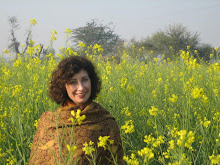
Wednesday, February 24, 2010

Yoga Vacation Part III


I went to the meditation/satsang hall the first night in the Ashram. I retract my statement about the inability to remain silent. The Ashramites (for lack of a better word) were meditating quietly. The atmosphere was palpable. Very nice.

After the meditation the chanting began. There was a "songbook" with the words in Sanskrit. I still can't get the hang of the chanting. While I love the sound of the drums and the harmonium, I've never cared for sing-alongs. Admittedly, the Ganesha melody was rather toe-tapping, but other than that, I couldn't get into it.

After chanting, the resident guru gives a lecture. However, this night was special. There was a movie on 2012! I have avoided the media hype around this apocalyptic year. I did the same here. After 15 minutes of psuedo-scientific drivel I discretely left and went back to my private room to sleep.

The room had two opposing windows and a fan so it was comfortably unstuffy. I read for a bit. It was requested that books were of an inspirational, spiritual matter. While I wasn't reading a trashy romance novel I was reading a non-fiction book on India. I figured that bent the rules just a little. I watched a gecko on the opposite site of the wall. He ran under the fluorescent light. I fell asleep.

Somewhere in the late hours of the night or the early hours of the morning (it really didn't matter) I felt a distinct plop on my bare bicep. I woke immediately, grabbed the thing (it felt like a rubbery piece of clothesline) and flung it across the room. I turned on the lights to find a dull red centipede on the floor curled up in a tight coil after his midnight flight. I used the Ashram brochure with all the rules and regulations on it to sweep his ass out the door.

Tuesday, February 23, 2010

Yoga Vacation Part II

My first afternoon at the Ashram I read the rules: Meditation and satsang in the morning, two two-hour periods of yoga a day, two meals (brunch and dinner) eaten in silence, karma yoga (selfless service like cleaning), no physical touching, no cell phones, no photos in the temples, etc. I walked around the grounds and discovered the Health Hut which served fresh fruit shakes, fruit salads, nuts, toast, and other snacks at specific hours.

I was a little surprised to see only saw a handful of Indians. The ashram guests were predominantly Westerners and Asians. And a social bunch they were. Strumming guitars, yacking, laughing, calling out. It started to slowly dawn on me why the minimum three-day stay was called "vacation" rather than retreat. I also realized it was a cheap vacation. At six hundred rupees a day included accommodations, four hours of yoga, meditation, chanting, lectures, and yoga instruction, it was a bargain. I suspect some people didn't even give a hoot about the yoga.

A bell rang indicating dinner was served. I went to the dining hall. Inside, there were long mats with pre-filled stainless steel trays of food. In all fairness, the food at an ashram is meant to be simple, vegetarian, and proportionate to keep the mind from getting dull. But each dish was watered down so much that only a few vegetables floated around in watery broth. You could eat as much as you wanted and servers walked by dishing out salad, ladling dhal, and handing out chapatis or other types of Indian bread. To get more food, your requested was predicated by Om. One woman seated on my right cried Om, Om, Om holding out her tray as if her life depended on it. A tall thin man on my left, tray to mouth, scooped up five platefuls of food.

Last August, I spent 10 days at a Vipassana meditation in total silence. It was peaceful and thoughtful. I expected a little of the same here. However the only time one had to observe silence was during meals. Damned if no one there could keep their pie-hole shut here. There wasn't even a trace of effort. "Om, please observe silence," came the word over the loudspeaker again and again. Not a second passed before the conversation started up again.

I silently stuffed another chapati in my pie-hole.

Monday, February 22, 2010

Yoga Vacation Part I


Auoooooooooommmmmmmmmm.


About a week ago I stayed for three days at the Sivananda Ashram at Neyyar Dam just east of Varkala Beach . After spending a week lolling around the beach and sipping coconut juice, I was ready for some yoga, meditation, and silence.

I took a two hour taxi ride to get there through skinny, winding roads and jungle. The cab was sweetly scented, since the driver had draped a fresh jasmine lei over the rear view mirror. Colorful Keralan-style houses in every imaginable shade stood out against the greenery of coconut palms, rubber tree plantations and tapioca fields. I saw purple, bright pink, turquoise, teal, lilac, powder blue, melon, lime green, violet, apricot, periwinkle and many more colors. A man on the road herded a gaggle of ducks. He had a stick with a plastic bottle on the end which I surmised was his herding staff to keep the ducks in line. The driver said he sells the ducks for the eggs they lay. "Very tasty, very strong."

Along the way I stopped at the Steve Irwin Crocodile Preserve. There was one rather stagnant pool with four crocodiles floating around. They are served "beaf" every other day. They're doomed. Hopefully the nearby waters were crawling with them.

I arrived at the ashram, ready to submit to structure and discipline. The grounds were beautiful. Set in the jungle were ornate temples, an open yoga/satsang/lecture hall with brick arches, rubber trees bleeding latex, and a "cannon ball" tree with exotic cream and pink blossoms and an equally exotic scent. The requisite crows were there but so were tree pieds, chatty jungle babblers, and Indian robins.

Thankfully, I reserved a shared room. The dormitories were adequate, but a little grim. My room had two beds, a private bath, small table, and a simple veranda. I scored. I felt like I was in the lap of luxury.

Thursday, February 18, 2010

Eat, Eat, Eat


Forget the pray and love. The food in Southern India in Kerala is a refreshing change from the heavily spiced, gravy-covered dishes of Rajasthan. I stayed at the Varkala Marine Palace on Varkala Beach and didn't miss a meal.

For me, it's all about the coconuts. A favorite food since I was a little girl, I've managed to eat it nearly three times a day here. In one week I've consumed: fresh coconut juice and coconut meat (hacked up by a strong Keralan woman with her machete), warm coconut pudding, coconut laden vegetables dishes, coconut curries, museli and coconut, and pina coladas with generous jiggers of rum. I've even watched them drying coconut on the beach to turn into oil. It's far more interesting than watching paint dry.

Keralans eat coconut in all forms by the tons. During a ride into town a billboard featured a giant coconut and read: One Nation, One Drink. Brought to you by the Coconut Development Board of India.


In between eating the perfect white fruit, I've noshed on little dumplings from the Tibetan restaurant; thin crust mushroom pizza that easily rivals my favorite in Seattle; lots of fresh seafood including blue marlin, butter fish, giant prawns and seafood fried rice; fresh watermelon, mango, and pineapple juice; the most delicious cucumber raita (with yoghurt sauce); and a thin puffy fried bread filled with cheese that tastes like the most divine grilled Velveeta cheese sandwich only the cheese is white.

The only things I haven't been crazy about were "fresh" croissants that turned out to be stale affairs full of ants, and a few items on the menu that didn't sound very appetizing, like Nutela Banana Craps. I assume they meant crepes.

It's been one year and three return trips to India since I've written, but I feel inspired here (and obviously hungry) and like I'm back in the saddle again. Come back and visit me. Barring spotty internet connections, I'll be here.


As for the pray thing, I did go to Sivananda ashram. Lots of yoga, meditation and "adequate" food. It's better for mental clarity...

Thursday, March 19, 2009

Miniature Paintings & More


While in Udaipur in Rajasthan I visited some of the studios known for producing miniature paintings, a traditional Indian art form. Artists painted everything from portraits to idyllic scenes from royal days with the aid of paint brushes made of squirrel tail hair(s). Rather than succumb to the chemicals that modern day painters use, those true to the art form use natural pigments including cow urine for the gold coloring.

Can't make it to India to see these masterpieces? Check out the Garden & Cosmos exhibit at the Seattle Asian Art Museum. It's a royally impressive collection of 58 paintings and works created from the 17th to the 19th century coming all the way from Jodhpur, in Rajasthan, India. And, it's the first exhibition of these works in the U.S.

These exotic creations of palace life, depictions of the gods, and portrayals of the cosmos are intensely colored in gorgeous hues and shades of gold, lilac, magenta, ochre, and deep jungle green. The paintings are precise, infinitesimally detailed, and mesmerizing. Silvery parrots and snowy egrets roost in lush trees. A bejeweled maharaja is serenaded by nubile bosomed queens and attendants. Steel gray elephants cavort beneath cobalt-blue rain clouds. Red-faced monkey soldiers wearing garments that look suspiciously like underpants bravely battle to rescue Sita, wife of Rama.

When your eyes tire of soaking in the painstaking yet beautiful detail, take a break in the room filled with photographs of Jodphur's and Rajasthan's rich culture including the people, forts, dancers, pageantry and modern day royalty.

Garden and Cosmos: The Royal Paintings of Jodhpur
Tues.-Sun., Through April 26 at the Seattle Asian Art Museum in Volunteer Park, 1400-E. Prospect St. 654-3100. www.seattleartmuseum.org

Image:
Maharaja Bakhat Singh Rejoices during Holi,
ca. 1748 - 50
Opaque watercolor on paper
Attributed to Nagaur, India
29 x 37"
Mehrangarh Museum Trust, RJS 1986

Wednesday, February 18, 2009

The Mustard Fields


Some months ago I was looking through one of my many guidebooks on India. In one picture there was a field of flowers with deep green stalks and bright yellow blossoms. It was so beautiful. I hoped that one day I would be in that place.

Last February I was in "that place." The picture was that of mustard fields in bloom in Northern India. As it turned out, I went to visit Keoladeo Ghana National Park, a world renown bird and animal preserve in Bharatpur, Rajasthan, with my friend Regina.

We drove by field after yellow field before stopping. As I walked through the waist-high mustard plants I felt privileged to be there. The driver pulled a few golden blossoms from a stalk and rubbed them on my wrist. It turned slightly yellow and smelled sweet and gentle.

After a day of bird watching we returned to The Bagh, a resort in Bharatpur (http://www.thebagh.com/). To me, it's more like a little slice of heaven. The expansive grounds abound in fruit trees, flowering bushes, and plants that attract a huge variety of birds. Outdoor pavilions are perfect for lounging and bird-watching in the early mornings and evenings. We took advantage of the heated pool and had oily, relaxing Ayurvedic massages.

In the evening we sat in the elegant but homey bar enjoying gin and tonics and chatted about the birds and animals we saw, including a giant python sunning itself. We had worked up an appetite from our hard day of birding, head massages, and drinks and headed for the restaurant.

The food at The Bagh is divine, with specialty dishes of the region. Quite frankly, it is some of the best food I've had in India. We dined on a dishes with five types of dhal, minced lamb, spiced rice with tomatoes and chilies, and my favorite: fresh mustard greens with garlic. I could not have been happier.

Monday, February 9, 2009

Ironing Out the Details


This morning I was hand-washing my unmentionables. I wash my fine lingerie in cold water with a gentle detergent. I rinse the delicate pieces and carefully lay them flat or hang them dry. Taking care of them ensures longevity.

During my first trip to India I was gathering up clothing for the hotel to launder. In the pile was a nice shirt that I typically hand wash. My roommate said, "Oh don't let them do that. They'll ruin it." I thought she sounded like the Ugly American. I have since used that same sentence.

I've seen Indian women at lakes and rivers pounding clothes with rocks and sticks. They wrench and twist them with deft wrists and strong forearms. The clothes take a real beating. Men stand on street corners surrounded by piles of laundry and iron. They use the real deal—heavy irons that are stoked with burning coals.

My laundry comes back very clean and flat. All pleats and ruching are gone. My panties are ironed and folded. Bras too. One T-shirt bra came back with the underwire hopelessly twisted. I threw it away. Now I just send out my jeans and T-shirts for laundering.

Monday, February 2, 2009

A Jewelry Junkie in India


I am a jewelry junkie. And there's nowhere better to be one than in India. The country is a treasure trove of jewelry and gems. Gold and jewels are on billboards and in stores,
adorning residents, depicted on deities, and embedded in buildings. Even animals drip in
jewels. During festivals elephants sport massive jangling anklets and ornate howdahs (riding carriages) studded with gems and precious metal. Horses and camels wear special headdresses covered with stones.

Jewelry is much more than pretty ornamentation in India. It's an integral part of the culture and economy. When babies are born they receive miniature bangles and silver anklets for their tiny wrists and ankles. Families often save up from birth for their daughter's weddings and dowries. (Dowries are technically outlawed but commonly practiced.) Brides are heavily adorned and showered with gifts of jewelry.

During auspicious occasions, holidays, and weddings women wear their finest jewels from gem-studded forehead ornaments to nose rings and earrings so heavy with gold and precious tones that a special support chain is wrapped around the top of the ear and attached to the earring. Like family doctors, most women have a family jeweler, usually the same one as their grandmother.

The Indian appetite for this precious metal is insatiable—and the population spends a considerable portion of their income on gold, especially solid, 18-24 karat gold jewelry which is popular among the masses. Forget stocks and bonds—jewelry is their bank account. One New Delhi business woman told me "Investing in gold jewelry is as good as investing in property." She also said solid gold bangles are considered one of best investments because they're in one piece without any cuts. Jewelry is handed down to daughters. "It's money saved as well for bad days that may come upon us," she said.

By some accounts, 90% of the world's colored stones are cut in Jaipur. Rubies, rose-cut diamonds, tourmaline, blue topaz, smoky quartz, citrine, emeralds, chalcedony, you name it, you'll find it. Gems are everywhere—even in small general stores.

I walked into one wholesale market and the clerk was sorting through piles of polished labradorite cabachons and ringing up Coke and bags of potato chips in between. The window display outside the towel held rolls of toilet paper next to hanks of faceted green amethyst. "Hey honey, don't forget the toilet paper while you're out—and pick ups some gems while you're at it."

Monday, January 5, 2009

A Chicken in My Kitchen


I was out of eggs. I thought about India.

Last year I visited the home of a villager in Central India. I met the family and toured the simple, tidy house painted bright turquoise. When we entered the dark kitchen it took my eyes a minute to adjust. I looked around at the small cooking space, well-used battered pots, rustic utensils and jars of spices.

I suddenly had the sense that someone was looking at me. I turned to find a chicken just to the left of my elbow, its black eyes staring. It sat quietly in its little basket suspended from the ceiling. As my eyes adjusted I saw another chicken nestled in its hanging basket in the corner. Fresh eggs. How convenient.

I wish I had a chicken in my kitchen. I got my car keys and went to the store.

Thursday, January 1, 2009

Happy New Year: To New Beginnings and Obliterated Obstacles


I put on my Ganesh necklace this morning in honor of the coming new year. Ganesh is the popular elephant headed god in the Hindu religion. In short, this jovial and big-bellied deity is the god of new beginnings, auspicious occasions, good fortune and the remover of obstacles.

Ganesh is the son of Shiva (the Destroyer) and his consort Parvati. Why does he have the head of an elephant? Because, Shiva was gone meditating in the mountains for a very long time and didn't know Parvati had bore him a son. When Shiva came home, a small boy was guarding the gate and would not let him enter to see Parvati. Shiva became enraged since it was his home and cut off the boy's head. It was Ganesh, Shiva's son. Parvati was understandably stricken when she saw what happened. She demanded Shiva remedy the situation. They prayed to Brahma, the creator. Brahma told Shiva to find the first living being and attach a new head to the boy. A baby elephant was the first thing Shiva ran into. Hence, the new elephant head.

While looking at jewelry in Jaipur I found the most beautiful carved coral Ganesh surrounded by an oval of polki (rose-cut) diamonds. I have never seen anything like it and knew it was meant for me. I didn't hesitate to buy it. A friend told me I should have it blessed before wearing it. Sounded like a good idea to me.

In Jaipur there is a very old Ganesh temple, Garh Ganesh. It's high atop a hill. My friend assured me we could drive up part of it. It was about 90 degrees that day in October. The tuk tuk driver let us off at the base of the stairs. It was still quite a climb. The stone steps were about 18 inches deep. We started the climb.

I saw families with little children walking up, the women in long saris and flip flops. Lone devotees ascended while young boys descended, practically running down the steep steps, sure-footed as mountain goats. Along the way we saw several little green bee-eaters flitting about and perched on skinny branches. They were so close, their little black eyes bright, and iridescent green feathers glinting in the sun. We stopped and watched them for a while.

It took about 30 minutes make the climb. On the way up I built a house. Actually, believers take rocks and make little "houses" out of them in the hopes that their dream home materializes. I built one, not because I want a house, but I liked doing it. At the top of the stairs we were rewarded with a panoramic view of Jaipur.

There were just a few people standing outside the temple selling items to offer Ganesh and use in worship: coconuts, incense, flower garlands. I looked at the silver doors to the temple. It was like looking at the emerald green doors to the Wizard of Oz. It was closed! I was crushed. But wait, it was 3:55pm. It opened at 4pm.

I rang the temple bell upon entering to clear my mind. The giant orange Ganesh was there, decorated with silver, flowers, and other colorful accoutrements. The priest sat before him. He didn't seem all that interested in the few devotees before him. He was much more involved in watching the 6-screen security system above. Sort of like being distracted by television when you're at a bar rather than engaging with your companion.

My friend asked the priest in Hindi to bless my Ganesh necklace. The priest said something in Hindi and put an orange tilak (vermillion paste) on my orange coral Ganesh. The mark was almost indistinguishable. Then he offered the vermillion to me and I used my middle finger to apply the tilak to my third eye. This was the first time this ritual was self-service. My friend explained to me that this was the sanctioned way of application for women. But, "If the priest wants to touch a lady then he will put it." Ah. I gave the priest 200 rupees for his time, blessing, and as an offering to Ganesh. The sun was low in the sky as we walked down the steep steps from the temple.

It's been a couple of months since then. My Ganesh still has traces of the tilak on his forehead. I'm looking forward to a new year full of new beginnings, joy, and successes. May 2009 bring peace, health and happiness to all beings. Om Shanti Om.

Sunday, December 28, 2008

The Scent of Chilies


We had a white Christmas this year in Seattle. While the flakes were swirling down, we were in the kitchen up to our elbows in masa. A Mexican tradition, my friend Yolanda taught me how to make tamales when I lived in Southern California. We had some friends over and spent the day drinking margaritas, kneading masa (corn dough), making molé, and filling masa smeared ojas (corn husks) with spicy chicken, roasted poblano chilies and jack cheese. The recipe for fun and food is simple: Sip, spread, stuff, steam, and eat until you burst.

The masa has a pinch of chili powder in it. The mole has a healthy handful added. While purchasing the tamale ingredients, I bought some New Mexico chili powder at the Mexican Market in Pike Place Market. "It's hot," the proprietress assured me. Good. I like it spicy. But I couldn't resist mixing spices from countries and continents by throwing in a bit of Indian chili powder I bought during one of my visits to Rajasthan.

The smell of it brought back memories. I was on my way to see gharials at the Chambal River in Sawai Madhopur. The crocodile-like reptiles are endangered and I wanted to see them in the wild. To do that, I had to be on the road by 5am for the nearly two hour ride. Apparently gharials get up early. I was in an open air jeep and the late February air was chilly. Then it became very fragrant. And spicy smelling. Suddenly, I saw mounds and hills of red. I thought it was flowers.

As we got closer I saw massive piles of drying red chili peppers. The sun was rising, the gharials were probably waking up, but I made the driver stop. Women in colorful saris and dazzling smiles were squatting in the midst of it all sorting the peppers. Men stood by tractors sipping warm chai. I walked around the mass of chilies, took pictures and big whiffs.

I got back in the jeep. The chili pepper detour made us "late." There were a few long-snouted gharials in the river, but I think we missed the bulk of them. And while I won't forget seeing these incredible reptiles motionless on the riverbanks, neither will I forget sniffing the air, heavy with the scent of drying chilies.

When I got back to Jaipur I bought a big bag of chili powder at the bazaar. It was freshly sealed by a boy holding the plastic bag over a candle flame.

Monday, December 22, 2008

Parting Thoughts on Kerala


The snow is 18 inches deep in Seattle right now. But frosty clumps are falling off the tree branches and spiky icicles are dripping from the eves of houses. It's melting. But I can't quite quit dreaming of Kerala yet. There are a few more sights that stick in my mind about the tropical paradise. For example:

 Women wearing sprays of creamy colored fragrant jasmine in their glossy black hair.

 Billions of bananas in green, yellow, and red.

 Groves of rubber trees with little black pots attached to catch the slow-dripping milky white latex. The cup fills over night.

 Small battered trucks and buses gaily painted bright yellow, orange, and red. They look like well-used and well loved children's tin toys.

 Hindu temples and gods and goddesses painted colors so vibrant the entrances look like something from a Disneyland ride.

 The slightly creepy, life-like statues of gurus, as well as Mary, Jesus and other Christian personalities behind glass. Single and tri-level structures presumably keep their clothes and countenances clean.

 The Jesus Christ Market with a picture of an open-armed Jesus inviting shoppers to stop by.

 A 75-year old Ghandi look-alike weaver hand-looming fabric.

 My "foot" massage at the resort where the girl clung to a rope for balance while she massaged me with her foot as I laid on the floor.

Kerala was a feast for the senses. I'm anxious to visit this state again, to eat, relax, and greedily take in the sights.

Sunday, December 21, 2008

Coconuts and Banana Leaves


It's still snowing in Seattle. At this rate, there's no doubt we will have a white Christmas. The lack of snow plowing equipment in combination with hilly roads and streets means most people are snowbound. It is really quite beautiful. I'm grateful that I'm a freelance writer and work from home. For me, the weather is no problem.

However, if I were in Kerala right now, it would be almost 90 degrees with 94 percent humidity. Yum. Southern India is a popular vacation spot during the holidays—this I know because the rates at all of the resorts and hotels are hiked up at this time. But, the end of September was a great time to visit. Hotel rates were still low and is wasn't that hot. Rates go up October 1. Better to go at the end of September—how much hotter can it be a week later?

In this chilly Seattle weather, I've been craving the food of Southern India. It's divine. One day, I had the quintessential lunch on a banana leaf in the jungle. A big pile of puffy rice was surrounded by several fascinating little piles of food—tangy curries, fresh coconut chutneys, super tasty and super salty little fish, even saltier pickles, and vegetables drowned in a variety of delicious spiced sauces. As a petite eater I didn't think I would finish this mountain of food, but I had no problem at all. I ate every bit of it the traditional style—shoveling it into my mouth with my fingers.

The coconut curries were especially flavorful. In Kerala there are coconut trees and groves everywhere you look. The trees have multiple uses— trunks are used for beams, fronds are used for thatching houses and baskets, coconut husks are used to weave into mats and ropes, coconut shells are used for fuel. They even fill old-fashioned irons with fiery shells to iron clothes. I saw truck beds filled to the brim with husks, presumably to be turned into fuel or coir for mats.

At our resort, my roommate continually asked for fresh coconut water. Oddly enough, it wasn't available. "What, with all these coconut trees?" she asked. We were told the man who delivered the coconuts was sick. While this is understandable, I was dumbfounded that someone else couldn't pick some coconuts and deliver them. This is such an Indian thing. Finally, on our last morning the staff brought out fresh coconuts with straws and fancy little umbrellas. Apparently the coconut man had recovered. It was a refreshing treat before leaving Kerala.

Friday, December 19, 2008

Visions of Palm Trees


It's still crispy outside and more snow is yet to come—this is the weather report's promise or threat, depending on your outlook. It's busy at the bird feeder in our backyard. The black capped chickadees and flickers with their black breasts and red cheeks are beautiful against the white snow. Even the common house sparrows look prettier. But I'm still having visions of palm trees dancing in my head. And other sights and sounds of Kerala.

In the short time I spent there, I noticed a few of the many differences between Northern and Southern India. For example, most of the men wear lungis, short sarong-like skirts wrapped at the waist. They come in colorful prints and plaids and look really comfortable, especially for the hot and humid weather. And they're actually quite sexy—especially on men with shapely calves. (It's easy to see why men prefer women in skirts.) They're often topped with a collared shirt, which seems a bit incongruent, like wearing a dress shirt with shorts. Men wear them for all their activities from carrying coconuts to riding motorcycles.

Some of my other favorite sights included:

 Women wearing sprays of creamy colored fragrant jasmine in their glossy black hair.

 Billions of bananas in green, yellow, and red.

 Groves of rubber trees with little black pots attached to catch the slow-dripping milky white latex.

 Small battered trucks and buses gaily painted bright yellow, orange, and red. They look like well-used and well loved children's toys.

 Hindu temples and gods and goddesses painted colors so vibrant the entrances look like something from a Disneyland ride.

Here in snowy Seattle the clouds are coming in and most of the bird feed has been demolished. I think it's time for a warm cup of chai...

Thursday, December 18, 2008

It's Warm Down South


I met a friend for lunch yesterday who just returned from India—and is going back in two weeks. A jewelry designer and goldsmith, she spends much of her time in Southern India near Mysore, and travels around Goa and Kerala. I am envious she is going to the warm, luscious south of the country since Seattle is experiencing a cold spell right now. Today the city is wearing a blanket of white snow and it's still falling. Exceedingly beautiful but downright chilly.

On my last trip to India I went to Kerala for a few days—much too short. I stayed at a wonderful resort on the Arabian Sea and just off the Poovar River called Isola di Cocco http://www.isoladicocco.com/. I have not traveled to many tropical locales, but it was surely paradise to me. The sprawling property is populated by coconut groves (hence the name "Island of Coconut"), has a private beach you can access by boat, an Ayurvedic spa, gorgeous swimming pool, beautiful outdoor dining, outdoor yoga facility (you can hear the ocean as you practice) and there is water everywhere.

Most of the resort is in the traditional architectural style of Kerala. Cozy cottages are made of teak wood inside and out with gabled roofs, verandahs, and airy bathrooms that are open to the outdoors. It was deliciously hot and humid when I was there in September. While my heat-sensitive roommate watched TV in the air-conditioned room I took walks on the beach, swam in the pool, took a yoga class and watched bright blue kingfishers dive for food in the ponds. I drank fresh watermelon juice and coconut water.

It's a warm memory on this chilly day.

Monday, December 15, 2008

Ho, ho, ho. Made in India


During one trip to India I met Surendra, who exports goods to the United States. I often think of him this time of year, especially when I'm shopping. He's in the business of supplying some of the retail giants in the U.S. with Christmas paraphernalia—stockings, tree skirts, tea and hand towels. Basically, anything red and green or a combination thereof and usually embroidered or embellished with sparkly accents.

He was very kind and welcoming. I had dinner at his house during Diwali, also known as the Festival of Lights, a celebration usually held at the end of October. It's a beautiful and festive time in India, especially in Jaipur, where buildings and homes are festooned with lights. Diwali has several meanings within the jumble of religions in India but essentially, it is a time to celebrate with family, give thanks, and ask for health and prosperity. Particular to Hinduism, the festival marks the victory of good over evil. Surendra and his family held a puja (prayer) before dinner in their small in-house temple. Specific Gods and Goddesses are important during this celebration including Laskshmi, the Goddess of wealth, propserity and luck.

The next day Surendra took a drive out to the country to visit villagers. We stopped in his four-wheel drive and he bought bananas on the side of the road to bringto the families. During the drive he spoke about the business of Christmas. He explained that when he first started manufacturing Christmas decorations neither he, nor the women making them, knew what they were. "I did not know what Christmas stockings were or what they were used for. I was making tree skirts for a year and a half and didn't know what they were. The women thought they were skirts that American women wore." As we drove by farmland, camel carts, and young girls carrying enormous bundles of kindling on their heads, Surendra talked about his success exporting Christmas goods. He said he has made 52,000 tree skirts and 72,000 Christmas stockings in just two years. "You worship God and ask for peace and prosperity for your family. Jesus has given me this." I thought this very ironic. And hilarious.

Surendra also talked about how villagers are trained and given the skills necessary to make the pieces. He offered that the job takes women out of the fields and away from other back-breaking means of work He also mentioned how his wife would help the workers if they needed health care or other assistance. I was very curious thought it would make a good article. Consumers would learn that there were a real pair of hands behind their Christmas stocking. After my return I e-mailed Surendra a couple of times inquiring about a potential article but I never heard back. I'm guessing it was more information than he wanted to share.

I often flip through the catalogs of retailers this time of year looking at Christmas decorations and see the word "Imported" printed after the description and before the ridiculously hiked up price. I'll pick up items in these same stores and invariably they have the little tag "Made in India", evidence of its origin. I always wonder if consumers really know how many hands have touched the things they casually buy. And if the hands and people behind these crafts are earning their fair share for their efforts.

Image: Village girl on her way home from the fields.

Thursday, December 11, 2008

My Recycled Goddess Shawl


There are millions of gods and goddesses in India. Literally. I have a few favorites. One is Durga. She is a 10 armed Goddess of strength. She's a warrior. She rides a tiger or a lion. She laughs at her enemies. She's cool. I have an image of Durga on a pendant I frequently wear, especially when I need to be reminded of her strength.

My friend Regina and I were in Deeg, a small town of Bharatpur near the famous Keoladeo Ghana Bird Sanctuary. We went birding in the morning and found out we were very close to a famous Durga temple. As fate would have it, it was Durga Day (Friday). Each day of the week is dedicated to a particular favorite god (Wednesday is for Ganesh, Tuesday for Hanuman, etc.). It took this as an auspicious omen.

Outside of the temple Regina and I got all the goodies Durga would like: a coconut, incense, candies, and flower garland. We went inside and gave Durga the loot. It's often hard to tell what's what in the temples. The deity is often a mass of flower garlands, sparkly foil crowns, bright orange paint, silver leaf, and lots of other sparkly embellishments. The priest split our coconut, now having been blessed by the goddess, gave us some sweets and a special treat of a red nylon Durga shawl decorated with gold garland. Our guide said this was very lucky for us. We left with our very special treats on a silver stainless steel platter.

Alas, Regina's treats never made it into the plastic bag. Cries from the locals sitting by the temple did nothing to stop a thieving red-faced monkey from ambushing Regina, deftly knocking the tray from her hand and making off with her blessed coconut. He jumped up on a wall and sat there happily munching his stolen prize. (See more about monkeys on my 12/9 Monkey Business post) At least Regina still had her glamorous Durga shawl.

I have since learned that the Durga "shawl" is called a "Mata Ki Chunary." It can be purchased outside of the temple to cover the head out of respect when you enter. As such, it is a symbol of the Goddess. Sometimes people give their Mata Ki Chunary to the priest as an offering to Durga. As my friend said, "The priest gets it from the devotee free of cost. So when any person offers good money for the temple, the priest gives it to them to please them. It is good business."

I love this. It's in keeping with the "Green" recycling theme that's so prevalent now in the U.S. It's also very typical of India—a fantastical, dichotomous mix of the spiritual and the material.

It's Christmas time here. We put up our kitschy lime green foil Christmas tree. I was never very happy with the tree skirts I have. Then I remembered my wondrous Durga shawl. The red garnet color and gold tinsel foil of the shawl look absolutely beautiful swathed around the Christmas tree. At least for the holiday season, I am reminded of Durga every day. I think she would like it. She has a good sense of humor.

Tuesday, December 9, 2008

Monkey Business


As an animal lover, I never tire of the wildlife and domesticated animals running around the streets and jungles of India. I still get excited whenever I see a monkey. I love watching them go about their daily business in the city or the forest. They are very busy.
They groom themselves, take care of their young, beg or steal food on the street, and pester residents and tourists alike. There is even a monkey patrol in New Delhi to keep them in line. http://en.rian.ru/world/20071024/85320947.html

There are two very common types of monkeys in Rajasthan: the red-faced, red-rumped Rhesus Macaque and the black-faced Hanuman Langur. Drivers and guides have often told me: "Red-faced mean monkey. Black-faced nice monkey." Red-faced monkeys tend to be more aggressive and I've seen more of them in the cities. Black-faced monkeys have very long, graceful limbs and tails. I've heard their warning call in a forest when a tiger approaches. They look like hairy little men when then sit on walls with their legs dangling over.

In Jaipur I've seen disagreements among disparate species. While walking down the alleys of Johari Bazaar, I saw a monkey get in a spat with a dog, though I'm not sure over what. There was snarling on the dog's part and paw swatting on the monkey's part.

Smart and conniving monkeys hang out at temples where there's sure to be food. Devotees offer sweets to the Gods which are in turned blessed. Pilgrims leave with the blessed sweets. Monkeys don't miss a trick and watch your hands as you leave temples.

In Deeg, my friend Regina was robbed of her plate of offerings as she left the Durga Goddess temple. Amid shouts from locals, a red-faced monkey ran up, slapped her plate from beneath and made off with her coconut. He smugly sat on the fence munching it right in front of us. In Sawai Madhophur, a black-faced monkey wrestled me for the rose garland around my neck. It was given to me by a priest at a local temple. I would have easily handed it over but the garland string got caught in my hat and earring, resulting in a tug of war. The monkey won, greedily stuffing roses in his mouth as I watched, massaging my ear.

So far my favorite bit of monkey business was watching a monkey milk a cow. On the way to Pushkar, a troop of monkeys on the roadside were busy with a group of cows. One was presumably picking fleas off a docile caramel-colored cow's flank. Another was fastidiously combing through the cow's tail hairs. But one industrious fellow was actually milking the cow. Really. Well, more than likely, he was picking fleas off the udders, but it sure looked like he was milking it. Even the stoic driver on the trip had a big smile on his usually staid face.

I really hope they never round up all the monkeys that carry on their business in busy cities. It would be far less entertaining.

Saturday, December 6, 2008

Holy Cow Story # 1


There are many holy cows in India. In fact, all cows in India are holy according to the Hindu religion. Cows freely roam the streets and alleyways in most large cites. They stop traffic, stand oblivious to motor scooters and cars in the middle of thoroughfares, and pensively chew their cud on the side of the road. On busy corners villagers sell fresh green fodder, bought by believing Hindus who in turn offer it to the cows as a religious gesture. For some, it is a daily ritual.

The big bovines are considered sacred, and are attributed qualities such as matriarchal nurturing and abundance. Most of the free-roaming cows are stray, non-productive animals. They should be given a wide berth and caution should be exercised around them as they can get aggressive.

As I was preparing to leave my friend's home in Agra I noticed a big, creamy colored cow standing outside of the house. It was looking through the wrought iron gate into the courtyard. "She comes everyday," said Monica. "My mother used to feed her the first chapati of the day." Monica now carries on the tradition and offering. We walked outside and Monica grabbed a broom and shooed the cow away. Apparently the holy mother had already had her chapati that morning.

I said my goodbyes to this kind family who welcomed me to their home and went on to Khajuraho. I now have another, and perhaps even better reason to visit this city, home to the Taj Mahal.

Friday, December 5, 2008

Sharad's Sisters Part II


I woke up completely rested at my friend Sharad's house in Agra. His sisters Monica and Aruna were already busy in the kitchen making special dishes. Aruna offered me chai. I watched her patiently slice potatoes into thin, perfect pieces for a dish she was making. Breakfast was a variety of Indian breads, a spicy potato dish and a sweet dish with grain, raisins and milk—delicious.

"Have you worn a saree?" asked Aruna. I had not. But always wanted to. I marveled at the Indian women in their brightly colored sarees embellished with rhinestones, sequins, and all things glittery. At times I've seen women standing in the median of dusty roads in sarees. They look like they're dressed in evening gowns for a glamorous cocktail party. "Would you like to?" asked Aruna. Of course!

Minutes later she produced a beautiful lavender colored saree. I put on the choli, a fitted short-sleeve bodice worn beneath the yards of silk. It fit perfectly. I was a little horrified my less-than-toned stomach was exposed, but relieved to know that a couple meters of the six meter saree would soon hide my indulgences.

I stepped into the simple, same-colored cotton skirt that serves as both slip and recipient of the saree fabric about to be stuffed into the waist of it. Since Aruna has been married for some time, and married women are typically the wearers of sarees, she began folding the length of the fabric accordion style. With Monica's help, they tucked it into the skirt, swathed my upper torso in sparkly lavender and threw the tail of the saree over my shoulder. It fell down my back like a waterfall and stopped short of the floor. It was the perfect length.

Monica brought out her boxed engagement jewelry for me to wear. We chose a matching lavender rhinestone bindhi, the mark married women wear on their forehead. I felt like an Indian princess.

Monica told me she didn't know what to expect when she heard I was coming. "I did not know what your character would be like, your behavior, what you would think. I'm very happy you came. I don't want you to leave." I was touched by this young woman's sincerity. She gave me a set of bangles—the same ones that I noticed she was wearing in her engagement pictures. I gave her a pair of peridot and carnelian earrings that a very dear friend made. They were stunning on her.